

Antioxidants in the daily diet – what role does vitamin C play?
Antioxidants appear more and more often in conversations about healthy eating, conscious supplementation and everyday care of the body. We can find them naturally in many vegetables and fruits, but also in dietary supplements. One of the most famous antioxidants is vitamin C, which performs many important functions in the body.
Why are the antioxidant properties of vitamin C so important? What exactly are free radicals and oxidative stress? Where should you look for vitamin C in your diet and when can you consider supplementing it? Let's take a closer look at this.
What are antioxidants?
Antioxidants, also called antioxidants, are compounds that help protect cells against oxidative stress. This broad group includes both some vitamins and compounds naturally occurring in plant products.
To understand their meaning, it is worth first explaining the concept of free radicals. These are reactive molecules produced in the body, among others, as a result of natural metabolic processes. Their formation may also be influenced by external and lifestyle factors.
The mere fact that free radicals exist does not mean there is a problem. The body has its own mechanisms to maintain balance. However, when the balance between oxidative processes and the body's defense capabilities is disturbed, we talk about... oxidative stress.
It is in this context that antioxidants present in the daily diet become particularly important.
Vitamin C – one of the most famous antioxidants
Vitamin C, or L-ascorbic acid, is a water-soluble vitamin. The human body cannot synthesize it on its own, so it must be supplied with the diet.
One of the important properties of vitamin C is its antioxidant effect. Vitamin C helps protect cells against oxidative stress.
However, this is not its only function. Vitamin C also contributes to maintaining proper energy metabolism and helps in the proper functioning of the immune system and nervous system. It also helps to reduce the feeling of fatigue and weariness.
This shows that vitamin C has a much broader meaning for the body than its most common association with immunity.
Vitamin C, antioxidant and oxidative stress
Thousands of chemical reactions take place in the body every day. The formation of reactive oxygen species is a natural element of many of these processes. The body has its own antioxidant systems, but ingredients supplied with the diet are also important.
One of them is vitamin C.
Thanks to its antioxidant properties vitamin C helps protect cells against oxidative stress. For this reason, it is worth ensuring the regular presence of its sources in the daily menu, instead of treating it only as an ingredient that we remember about in autumn and winter.
Interestingly, vitamin C also helps regenerate the reduced form of vitamin E. This shows that individual nutrients do not function in the body in complete isolation from each other.
Natural sources of vitamin C – not only lemon
The first product associated with vitamin C is often lemon. Meanwhile, the list of its natural sources is much longer.
Vitamin C can be found, among others, in peppers, black currants, parsley, berries, kiwi, citrus fruits and cruciferous vegetables such as broccoli and Brussels sprouts.
The best way to provide the body with vitamins and other valuable ingredients remains varied and properly balanced diet. Therefore, it is worth reaching for various types of vegetables and fruits regularly, instead of limiting yourself to one product considered to be particularly rich in vitamin C.
Please also remember that vitamin C is sensitive to, among other things, high temperature and long-term storage. The way food is prepared may therefore influence its content in the finished meal.
Vitamin C and immunity
Although vitamin C is primarily associated with the fall and winter season, the body needs it all year round.
Vitamin C helps in the proper functioning of the immune system. However, this does not mean that it should be treated as a way to treat infections or a means to avoid colds.
In the context of immunity, it is worth taking a broader look. A properly balanced diet, sleep, physical activity, regeneration and other elements of a healthy lifestyle are important. Vitamin C is one of many nutrients needed by the body to function properly.
Vitamin C and collagen production
The antioxidant properties of vitamin C are extremely important, but it is worth mentioning one more function.
Vitamin C helps in proper collagen production to ensure the proper functioning of, among others, skin, bones, cartilage, blood vessels, gums and teeth.
This is another reason why it is worth ensuring an adequate supply of this vitamin regardless of the season.
Diet or vitamin C supplementation?
The basis for providing nutrients should be a varied diet. However, in certain situations, dietary supplements may complement the daily diet.
Various preparations containing vitamin C are available on the market. They differ, among other things, in dose, composition and form used. One possibility is liposomal vitamin C.
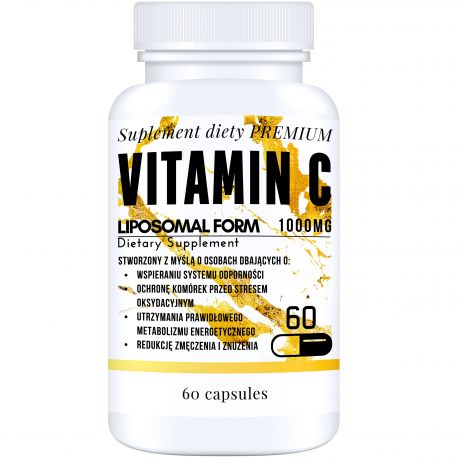
An example would be a supplement containing 1000 mg of vitamin C in liposomal form and phosphatidylcholine, available in capsules. This form may be a convenient solution for people who want to supplement their diet with vitamin C and prefer supplementation in capsules.
However, it is worth remembering that a higher dose does not always mean that a given product is suitable for everyone. Supplementation should be adjusted to individual needs, diet and other preparations taken.
A dietary supplement should not be treated as a replacement for a varied menu and a healthy lifestyle.
Liposomal vitamin C 1000 mg – a convenient way to supplement your diet
People who want to supplement their daily diet with vitamin C can use dietary supplement Liposomal Vitamin C 1000 mg with phosphatidylcholine – 60 capsules. The product combines a high content of vitamin C with a liposomal form and phosphatidylcholine and is enclosed in convenient capsules.
The product's distinguishing feature is liposomal form of vitamin C and the presence of phosphatidylcholine. This is a proposition for people looking for a vitamin C supplement in capsules that can be easily included in daily supplementation.
Package includes 60 capsules, making the product a practical option for people who want to regularly supplement their diet with vitamin C.
Antioxidants are best treated as part of your entire diet
When it comes to antioxidants, it's easy to focus on a single ingredient. Meanwhile, a healthy diet should provide many different substances present primarily in vegetables, fruits and other plant products.
Therefore, instead of looking for one "strongest antioxidant", it is better to ensure a variety of daily meals. Colorful peppers, berries, green vegetables, citrus fruits and kiwi can be a simple way to enrich your menu.
If the diet does not provide enough specific ingredients or there is an increased demand, appropriately selected supplementation may be considered.
Summary
Antioxidants are an important element of the daily diet, and one of the best-known representatives of this group is vitamin C. It helps protect cells against oxidative stress, supports the proper functioning of the immune system, contributes to proper energy metabolism and helps reduce the feeling of fatigue and weariness.
Vitamin C also participates in the proper production of collagen, so its importance for the body goes beyond its popular association with the cold season.
Its natural sources should be sought primarily in a varied diet rich in vegetables and fruits. The menu can be supplemented with a carefully selected supplement, e.g. liposomal vitamin C 1000 mg with phosphatidylcholine capsules.
However, the most important thing is a comprehensive approach: a varied diet, regular physical activity, appropriate regeneration and conscious use of supplementation. Antioxidants – including vitamin C – should be part of this lifestyle, not a replacement.
The dietary supplement cannot be used as a substitute for a varied diet. A balanced diet and a healthy lifestyle are important for the proper functioning of the body.
Comments
Log in or create an account to post a comment.