

What are pheromones?
Pheromones are volatile, invisible chemicals produced by both animals and humans. They only interact within the same species. Their main task is to increase attractiveness in the eyes of the opposite sex and facilitate communication with the environment. They can therefore be considered an ally in both intimate and social relationships. They act as a natural lure, influencing the recipient's subconscious, even though their scent is imperceptible. In humans, pheromones are produced, among others, by: in the preputial glands, perianal glands, sebaceous glands, axillary glands, submaxillary glands, Herder glands, lacrimal glands, as well as in the liver, oral cavity and sexual organs. They occur in secretions such as saliva, urine, plasma, vaginal and prostate secretions, tears and sweat. One of their most important sources are the glands located under the arms. Pheromones are not perceived by us as an ordinary scent - we cannot consciously state that we feel them. They directly affect the nervous system, causing specific emotional or behavioral responses. Scientists still do not know exactly how many types of pheromones the human body produces - so far only some of them have been studied.
Perfumes with pheromones – do they really work?
Perfumes with the addition of pheromones are cosmetics that, according to producers, can increase the attractiveness and stimulate the senses of potential partners. The substances they contain are intended to imitate natural chemical signals sent by the body, which in theory can influence how others perceive us. But is this really the case in practice?
How to choose perfume with pheromones?
- Understand how pheromones work – Pheromones are chemical compounds produced by the body that transmit specific signals to other people - they may concern gender, maturity, health or readiness for relationships. Perfumes use their natural or synthetic equivalents to produce a similar effect.
- Check the composition and concentration – Choose products that clearly state the type of pheromones used and their concentration. Some perfumes focus on pheromones that support self-confidence, others on those that, according to research, can increase attractiveness in the eyes of the opposite sex.
- Choose your fragrance – Pheromones are odorless, so the overall perception of the perfume is determined by the main fragrance composition. Consider whether you prefer subtle and delicate aromas or expressive and persistent ones. This is a very individual matter - the most important thing is that the scent makes you feel comfortable.
- Read reviews – It's worth reading the reviews of other users - you'll find out how long the scent lasts, whether anyone has actually noticed a difference in public perception and in what situations the perfume works best.
How do pheromone perfumes work?
Pheromones affect the subconscious and are received by special receptors, although we do not consciously sense their scent. They activate the hypothalamus - the part of the brain responsible for, among others, for the regulation of sex hormones and desire-related responses. They can influence the first phase of sexual behavior by transmitting non-verbal signals regarding, among others: gender, maturity, health status or readiness for relationships.
Sample pheromone perfumes
- PheroStrong Women's 50 ml - intense formula created for women, combining subtlety and sensuality.

- PheroStrong Men's 50 ml - a fragrance composition for men, designed to bring out magnetism and masculinity.

- Love Desire Women's 50 ml - a softer, romantic note, perfect for women looking for a delicate, feminine charm.

- Love Desire Men's 50 ml - enveloping and attractive perfume, created with male attractiveness and closeness in mind.
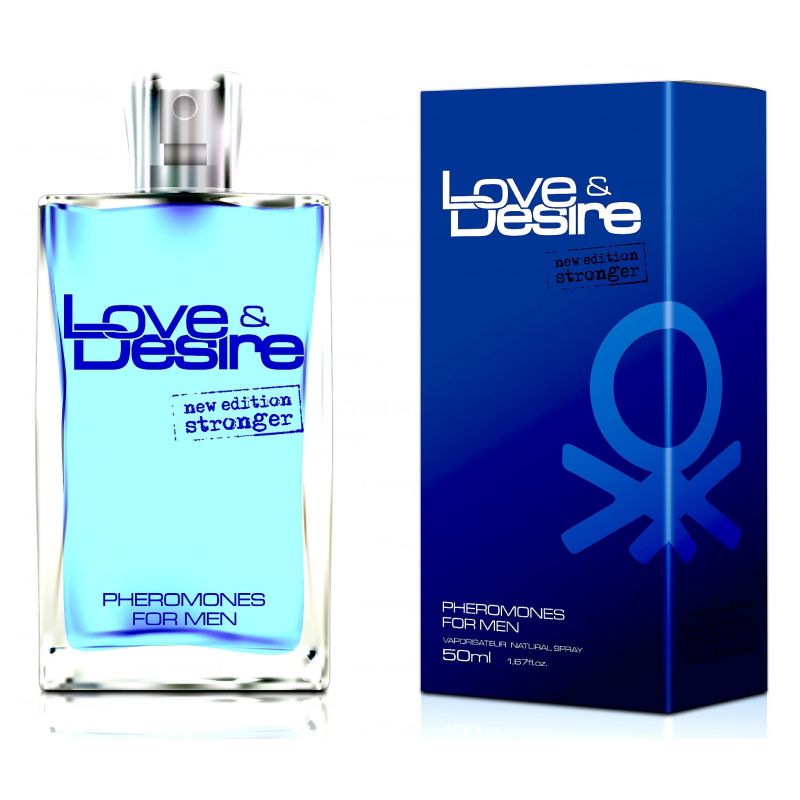
What do you gain?
- Enhanced attractiveness – Pheromone perfumes, such as those from the PheroStrong and Love Desire lines, are intended to influence the subconscious of the surroundings. Although we do not feel them directly, they can influence the perception of attractiveness and build a better atmosphere in relationships.
- Versatility and style – Different versions (women's and men's, intense and romantic) allow you to match the fragrance to your character and occasion, from important meetings to evening moments of relaxation.
How to use perfume with pheromones?
- Where to apply? – You will achieve the best results by applying perfume to the places where your pulse is most noticeable: on your wrists, neck, behind your ears or behind your knees. Body heat at these points gradually releases the scent, allowing the pheromones to affect the environment for a longer period of time.
- How much perfume should I use? – In this case, less is more. Perfumes with pheromones are usually more concentrated than standard compositions, so a few drops or one or two sprays are enough.
- Selecting a fragrance for the occasion – When choosing women's or men's pheromones, consider not only gender, but also personality and situation. Subtle compositions are perfect for everyday use, while more intense ones are perfect for special occasions when you want to make a stronger impression.
- The effect is not only in the bottle – Remember that perfumes with pheromones work best as an element of a coherent image. Take care of your hygiene, choose clothes you feel confident in, and maintain a positive attitude. Pheromones can enhance your attractiveness, but you will achieve the real effect when you combine them with self-confidence and a well-groomed appearance.
Myths and reality
- Myth 1: Perfume with pheromones works like a "magic elixir" and reliably attracts potential partners.
Reality: Although pheromones naturally influence interpersonal relationships, scientific evidence for the effectiveness of their synthetic counterparts in perfumes is limited. - Myth 2: This is the only effective way to increase your attractiveness.
Reality: Attractiveness is the result of many factors - appearance, behavior, personality and the so-called chemistry between people. Pheromones can only be an additional element that supports self-confidence.
What are aphrodisiacs?
Modern science defines aphrodisiacs as substances taken in the form of food or medicine that are intended to increase sexual desire. Aphrodisiacs are divided into three main types, depending on their function:
- those that increase libido,
- those that improve potency,
- and those that intensify pleasure during sexual intercourse.
Do natural aphrodisiacs work?
Aphrodisiacs in seafood
When many people think of aphrodisiacs, they immediately associate oysters. In fact, in numerous sources you can read that oysters have a positive effect on sexual drive. However, from the perspective of scientific research, no experiments on humans have been conducted so far that would clearly confirm the effectiveness of oysters as aphrodisiacs. Oysters are rich in zinc and two amino acids necessary for the proper functioning of the reproductive system. However, a single consumption of oysters does not immediately lead to the replenishment of these nutrients in the body. Moreover, if we do not suffer from their deficiency, regular consumption of oysters may not bring a noticeable difference in the level of libido or sexual performance.
Aphrodisiacs in herbs and spices
Chocolate
Does chocolate really work as an aphrodisiac? This popular product may help increase sexual drive mainly due to its positive associations and mood-improving effect. The cocoa contained in chocolate stimulates the secretion of endorphins, called happiness hormones. However, a study conducted in Italy compared the levels of sexual desire and satisfaction in women who consumed chocolate daily and those who ate it occasionally. The results showed no significant differences, which indicates that despite the popularity of chocolate as an aphrodisiac, its effect on libido is symbolic rather than scientifically proven.
Maca root (Lepidium meyenii)
Maca is one of the few plants whose effect on libido has been confirmed by scientific research on both humans and animals. Using maca increases sexual desire, and one study suggests that it also helps prevent loss of libido caused by antidepressants. In Poland, maca is most often available as a dietary supplement, which makes it difficult to include it in daily meals. Positive effects usually appear only after 2-12 weeks of regular intake of 1.5 to 3.5 grams per day, so maca is not an immediate aphrodisiac.
Saffron
Saffron, the most expensive spice in the world, has an aphrodisiac effect especially in people suffering from depression. Scientific research indicates that its use can increase sexual drive and improve erectile function in people taking antidepressants, probably due to its stress-reducing properties. In one study, men taking 30 mg of saffron daily for 4 weeks saw improvements in sexual function, as did women in the study group. However, as with maca, the effects require regular use, and a single serving of the spice will not bring quick results. There is also a lack of research confirming the benefits in people without depression.
Ginseng
Ginseng is famous for its wide spectrum of effects: it improves blood circulation, has antithrombotic properties, reduces stress, prevents fatigue and supports sexual functions. For this reason, it is often mentioned as one of the most important natural aphrodisiacs. Studies have shown that red ginseng helps men with erectile dysfunction, being twice as effective as a placebo. Additionally, in a small study, postmenopausal women who took ginseng reported an increase in sexual attraction. Despite this, there is still no clear research confirming its effectiveness as an aphrodisiac, and positive effects are achieved only after a long period of regular supplementation.
Summary
Pheromone perfumes combine scientific principles with users' personal experiences. Although research on their effectiveness is ambiguous, many positive opinions indicate that they can be an interesting and valuable addition to daily care and building self-confidence and attractiveness. In turn, aphrodisiacs, natural substances that support libido, potency and sexual pleasure, have various levels of effectiveness. Popular products such as oysters or chocolate do not always have scientifically proven effects, while plants such as maca, saffron or ginseng show greater potential, although they require regular use. Ultimately, both pheromones and aphrodisiacs can be supportive, but the key to a satisfying intimate life is a healthy lifestyle, positive attitude and self-care.
Comments
Log in or create an account to post a comment.